
If you are learning Data Structures and Algorithms, you have probably come across both Kadane's Algorithm and the Sliding Window technique. Since both are often used with arrays, many beginners get confused between them.
The truth is that they solve different types of problems.
Kadane's Algorithm is mainly used to find the maximum sum subarray, while Sliding Window is a general technique that helps process a group of consecutive elements efficiently.
Let's understand both with simple examples.
What is Kadane's Algorithm?
Kadane's Algorithm is used to find the maximum sum of a contiguous subarray in an array.
Instead of checking every possible subarray, it keeps track of the current sum and decides whether to continue the current subarray or start a new one.
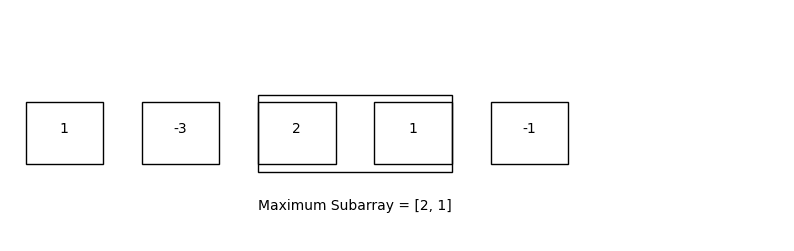
Consider the following array:
[1, -3, 2, 1, -1]
As we move through the array:
Start with 1
Add -3 → Sum becomes -2
At 2, it is better to start a new subarray
Add 1 → Sum becomes 3
Add -1 → Sum becomes 2
The maximum sum obtained is 3.
The subarray responsible for this sum is:
[2, 1]
Kadane's Algorithm Visualization
[Insert image showing maximum subarray selection and running sum updates]
C++ Implementation
#include <iostream>
#include <vector>
#include <algorithm>
using namespace std;

int kadane(vector<int>& arr) {
    int currentSum = arr[0];
    int maxSum = arr[0];

    for (int i = 1; i < arr.size(); i++) {
        currentSum = max(arr[i], currentSum + arr[i]);
        maxSum = max(maxSum, currentSum);
    }

    return maxSum;
}

int main() {
    vector<int> arr = {1, -3, 2, 1, -1};

    cout << "Maximum Sum: " << kadane(arr);

    return 0;
}
Time Complexity
O(n)
Space Complexity
O(1)
What is the Sliding Window Technique?
Sliding Window is not a single algorithm. It is a problem-solving technique.
The idea is simple. Instead of recalculating values for every subarray, we maintain a window and move it across the array.
This makes many problems much faster.
Suppose we want to find the maximum sum of a subarray of size 3.
Array:
[2, 1, 3, 4, 1, 2, 1, 5, 4]
Window size:
k = 3
The windows will be:
[2, 1, 3] = 6
[1, 3, 4] = 8
[3, 4, 1] = 8
[4, 1, 2] = 7
[1, 2, 1] = 4
[2, 1, 5] = 8
[1, 5, 4] = 10
The maximum window sum is:
10
Kadane's Algorithm vs Sliding Window: What's the Difference?
If you are learning Data Structures and Algorithms, you have probably come across both Kadane's Algorithm and the Sliding Window technique. Since both are often used with arrays, many beginners get confused between them.
The truth is that they solve different types of problems.
Kadane's Algorithm is mainly used to find the maximum sum subarray, while Sliding Window is a general technique that helps process a group of consecutive elements efficiently.
Let's understand both with simple examples.
What is Kadane's Algorithm?
Kadane's Algorithm is used to find the maximum sum of a contiguous subarray in an array.
Instead of checking every possible subarray, it keeps track of the current sum and decides whether to continue the current subarray or start a new one.
Consider the following array:
[1, -3, 2, 1, -1]
As we move through the array:
Start with 1
Add -3 → Sum becomes -2
At 2, it is better to start a new subarray
Add 1 → Sum becomes 3
Add -1 → Sum becomes 2
The maximum sum obtained is 3.
The subarray responsible for this sum is:
[2, 1]
Kadane's Algorithm Visualization
[Insert image showing maximum subarray selection and running sum updates]
C++ Implementation
#include <iostream>
#include <vector>
#include <algorithm>
using namespace std;

int kadane(vector<int>& arr) {
    int currentSum = arr[0];
    int maxSum = arr[0];

    for (int i = 1; i < arr.size(); i++) {
        currentSum = max(arr[i], currentSum + arr[i]);
        maxSum = max(maxSum, currentSum);
    }

    return maxSum;
}

int main() {
    vector<int> arr = {1, -3, 2, 1, -1};

    cout << "Maximum Sum: " << kadane(arr);

    return 0;
}
Time Complexity
O(n)
Space Complexity
O(1)
What is the Sliding Window Technique?
Sliding Window is not a single algorithm. It is a problem-solving technique.
The idea is simple. Instead of recalculating values for every subarray, we maintain a window and move it across the array.
This makes many problems much faster.
Suppose we want to find the maximum sum of a subarray of size 3.
Array:
[2, 1, 3, 4, 1, 2, 1, 5, 4]
Window size:
k = 3
The windows will be:
[2, 1, 3] = 6
[1, 3, 4] = 8
[3, 4, 1] = 8
[4, 1, 2] = 7
[1, 2, 1] = 4
[2, 1, 5] = 8
[1, 5, 4] = 10
The maximum window sum is:
10
Sliding Window Visualization
[Insert image showing a fixed-size window moving across the array]
C++ Implementation
#include <iostream>
#include <vector>
#include <algorithm>
using namespace std;

int maxWindowSum(vector<int>& arr, int k) {
    int windowSum = 0;

    for (int i = 0; i < k; i++) {
        windowSum += arr[i];
    }

    int maxSum = windowSum;

    for (int i = k; i < arr.size(); i++) {
        windowSum += arr[i];
        windowSum -= arr[i - k];

        maxSum = max(maxSum, windowSum);
    }

    return maxSum;
}

int main() {
    vector<int> arr = {2, 1, 3, 4, 1, 2, 1, 5, 4};

    cout << maxWindowSum(arr, 3);

    return 0;
}
Time Complexity
O(n)
Space Complexity
O(1)
Kadane's Algorithm vs Sliding Window
Feature | Kadane's Algorithm | Sliding Window |
|---|---|---|
Purpose | Find maximum sum subarray | Process consecutive elements efficiently |
Type | Specific algorithm | General technique |
Window Size | Dynamic | Fixed or variable |
Common Use | Maximum subarray problems | Subarray and substring problems |
Time Complexity | O(n) | O(n) |
When Should You Use Kadane's Algorithm?
Use Kadane's Algorithm when:
You need the maximum sum contiguous subarray.
The subarray length is not fixed.
Negative values are present in the array.
The problem specifically asks for maximum subarray sum.
When Should You Use Sliding Window?
Use Sliding Window when:
The problem involves a fixed-size subarray.
You need the longest or shortest valid subarray.
You are working with substrings in strings.
The window needs to expand or shrink based on conditions.
Common examples include:
Maximum sum of size K
Longest substring without repeating characters
Minimum size subarray sum
Count of distinct elements in a window
Final Thoughts
Kadane's Algorithm and Sliding Window are both important techniques, but they are not the same thing.
Kadane's Algorithm is a specialized solution for finding the maximum sum contiguous subarray. Sliding Window is a broader technique that can be applied to many different array and string problems.
A simple way to remember the difference is this:
If the problem asks for the maximum subarray sum, think of Kadane's Algorithm.
If the problem involves processing a continuous range of elements efficiently, think of Sliding Window.
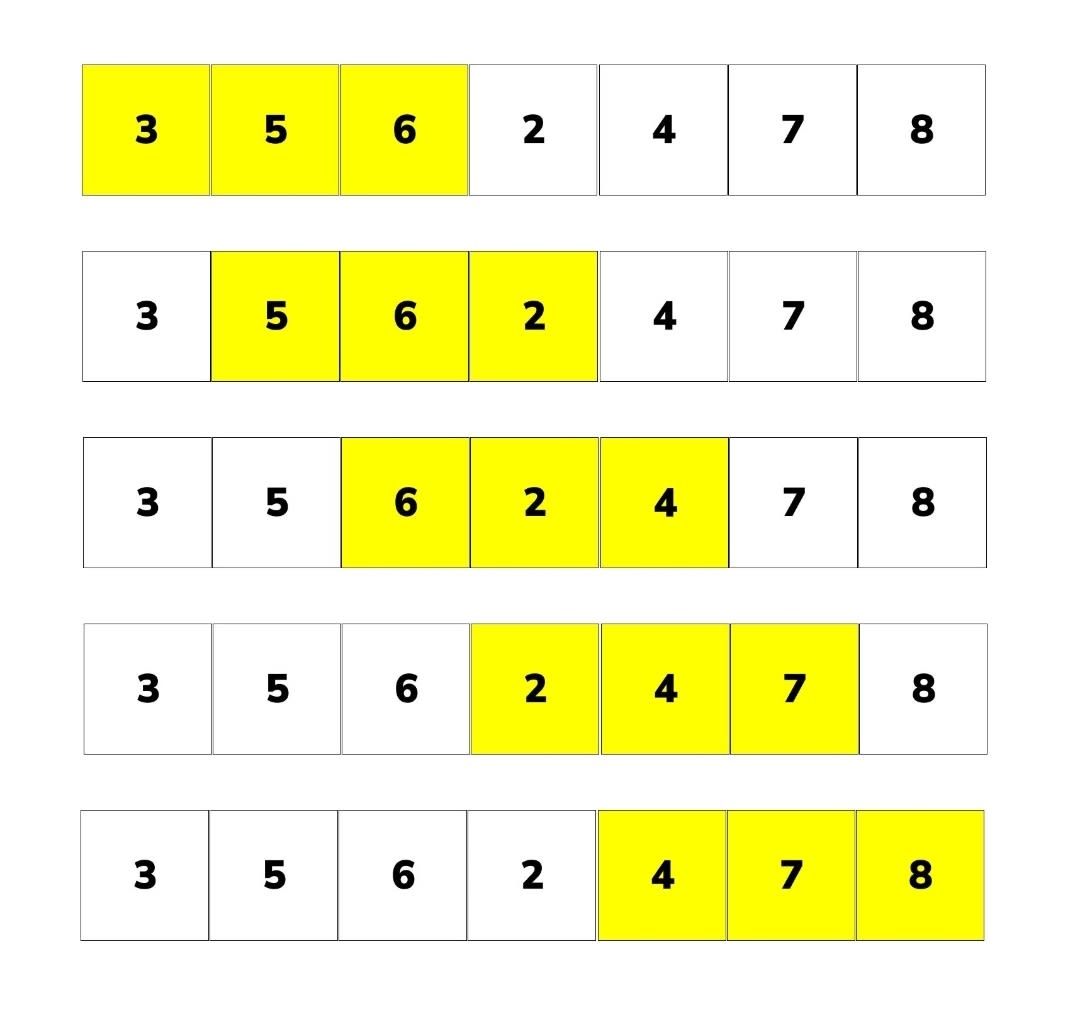
Sliding Window Visualization
[Insert image showing a fixed-size window moving across the array]
C++ Implementation
#include <iostream>
#include <vector>
#include <algorithm>
using namespace std;

int maxWindowSum(vector<int>& arr, int k) {
    int windowSum = 0;

    for (int i = 0; i < k; i++) {
        windowSum += arr[i];
    }

    int maxSum = windowSum;

    for (int i = k; i < arr.size(); i++) {
        windowSum += arr[i];
        windowSum -= arr[i - k];

        maxSum = max(maxSum, windowSum);
    }

    return maxSum;
}

int main() {
    vector<int> arr = {2, 1, 3, 4, 1, 2, 1, 5, 4};

    cout << maxWindowSum(arr, 3);

    return 0;
}
Time Complexity
O(n)
Space Complexity
O(1)
Kadane's Algorithm vs Sliding Window
Feature | Kadane's Algorithm | Sliding Window |
|---|---|---|
Purpose | Find maximum sum subarray | Process consecutive elements efficiently |
Type | Specific algorithm | General technique |
Window Size | Dynamic | Fixed or variable |
Common Use | Maximum subarray problems | Subarray and substring problems |
Time Complexity | O(n) | O(n) |
When Should You Use Kadane's Algorithm?
Use Kadane's Algorithm when:
You need the maximum sum contiguous subarray.
The subarray length is not fixed.
Negative values are present in the array.
The problem specifically asks for maximum subarray sum.
When Should You Use Sliding Window?
Use Sliding Window when:
The problem involves a fixed-size subarray.
You need the longest or shortest valid subarray.
You are working with substrings in strings.
The window needs to expand or shrink based on conditions.
Common examples include:
Maximum sum of size K
Longest substring without repeating characters
Minimum size subarray sum
Count of distinct elements in a window
Final Thoughts
Kadane's Algorithm and Sliding Window are both important techniques, but they are not the same thing.
Kadane's Algorithm is a specialized solution for finding the maximum sum contiguous subarray. Sliding Window is a broader technique that can be applied to many different array and string problems.
A simple way to remember the difference is this:
If the problem asks for the maximum subarray sum, think of Kadane's Algorithm.
If the problem involves processing a continuous range of elements efficiently, think of Sliding Window.